
In power systems, safety and correct measurement are very important. Electricians and engineers handle high voltage and high current every day, so even a small mistake can cause damage or danger. That is why understanding the Difference Between a Current Transformer and a Potential Transformer is necessary.
A Current Transformer (CT) reduces high current to a small, safe value like 1A or 5A for meters and relays. A Potential Transformer (PT), also called a Voltage Transformer (VT), reduces high voltage, such as 11kV, to a safe level, like 110V, so instruments can measure it easily.
In this blog, we will simply explain their functions, working, construction, connections, types, uses, and safety tips. Step by step, you will clearly understand the Difference Between Current Transformer and Potential Transformer in easy words.
What is a Current Transformer (CT)?
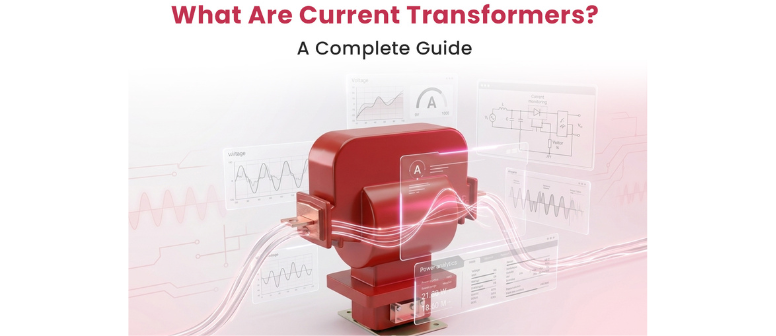
A Current Transformer (CT) is an important device used in power systems to reduce high AC current to a lower and safe level, such as 5A or 1A. This helps meters, relays, and protection devices measure the current accurately without getting damaged.
It also provides safety by keeping the measuring instruments away from high voltage.
What is a Potential Transformer (PT/VT)?
A Potential Transformer (PT), also called a Voltage Transformer, is a device that reduces high voltage in power systems to a safe, lower level. This allows meters, relays, and monitoring devices to measure voltage accurately and safely.
PTs are mainly used in substations and industries for power system monitoring, control, and protection.
Difference Between Current Transformer and Potential Transformer
Understand how Current Transformers and Potential Transformers differ in function, construction, and usage for safe and accurate power system measurement.
|
Feature |
Current Transformer (CT) |
Potential Transformer (PT) |
|
Basic Function |
Converts high current to low current for safe measurement. |
Converts high voltage to low voltage for safe measurement. |
|
Connection Method |
Connected in series with the power line. |
Connected in parallel with the power line. |
|
Primary Winding Role |
Carries the actual line current being measured. |
Maintains and measures the line voltage. |
|
Primary Winding Turns |
Very few turns on the primary side. |
Many turns on the primary side. |
|
Secondary Winding |
Has many turns. Must never be open-circuited during operation. |
Has fewer turns. Can be open-circuited without damage. |
|
Secondary Output |
Standard output: 5A or 1A. |
Standard output: 110V. |
|
Transformation Ratio |
High transformation ratio (because the primary current is high). |
Low transformation ratio (because the primary voltage is high). |
|
Main Use |
Used to measure very high current safely. |
Used to measure very high voltage safely. |
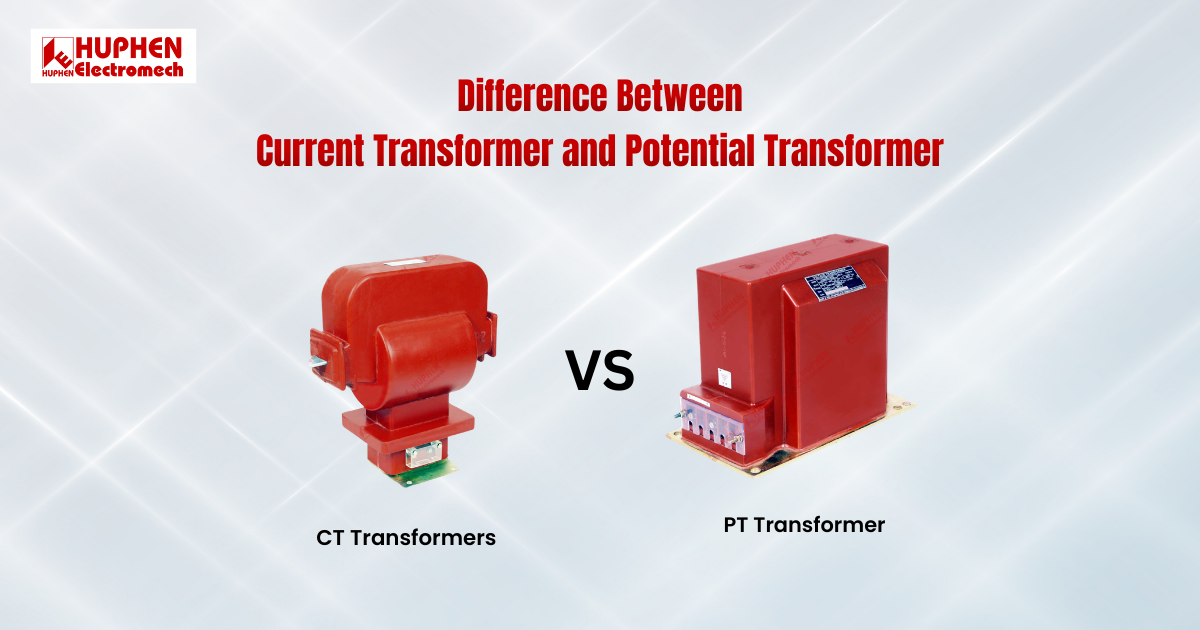
Although CTs and PTs look similar on the outside, their internal structures are quite different.
Why Choose Huphen CTs and PTs for Accurate Power System Measurement?
Huphen offers high-quality Dry Type HT Current Transformers (CTs) and Potential Transformers (PTs) designed for safe, accurate, and reliable performance in power systems up to 33kV. Our CTs ensure precise current measurement for protection and metering, while our PTs safely step down high voltage for monitoring and control.
- Available in a wide voltage range like 3.3kV, 6.6kV, 11kV, 22kV, and 33kV
- Suitable for substations, industries, and utility networks
- Built with strong insulation for maximum safety
- Designed with durable construction to withstand tough conditions
- Ensures long service life and stable performance
- Offers dependable operation even in demanding electrical environments
Conclusion
Understanding the Difference Between Current Transformer and Potential Transformer is essential for anyone working in electrical systems. Both CTs and PTs make power measurement safe, accurate, and reliable, but they perform different jobs and operate differently. CTs handle high currents, while PTs handle high voltages.
Their construction, connection, and application also vary. By knowing these differences, engineers and technicians can select the right transformer for metering, monitoring, and protection, ensuring safety and efficient power system operation.
For further enquiries or to get the best solutions in CTs, PTs, and other high-quality electrical components, please contact us at +91 9607381475 / +91 2532381475 and email us at info@huphen.com.
Note:- "This information is provided for informational purposes only. We are not responsible or liable for any issues arising from it."
FAQs
1. How to differentiate between CT and PT?
A CT (Current Transformer) reduces high current, is connected in series, and has few primary turns. A PT (Potential Transformer) reduces high voltage, is connected in parallel, and has many primary turns.
2. What are the advantages of using CT and PT?
CTs and PTs give standard output values (like 5A or 1A for CTs and 110V for PTs), so normal measuring instruments can be used safely. They make it easy and affordable to measure high current and high voltage.
3. What is a PT transformer used for?
A PT is used to step down high voltage to a safe, lower level so that meters, relays, and monitoring devices can measure voltage accurately.
4. Why are CT and PT required?
CTs and PTs are needed to safely measure high current and voltage in power systems. They reduce dangerous levels to safe values that instruments can handle.
Related Blogs

.png)