
.png)
In electrical power systems, handling and measuring high voltage safely is very important for smooth and reliable operation. Directly measuring high voltage can be dangerous and can damage equipment. This is where a potential transformer (PT) becomes essential. It helps reduce high voltage to a safe level so that meters, relays, and monitoring devices can work accurately without risk.
If you’ve ever wondered what is potential transformer and how it protects electrical systems, this guide will explain its working, uses, and importance in simple and easy-to-understand words.
What is Potential Transformer?
A potential transformer (PT), also called a voltage transformer (VT), is a device that reduces high voltage to a safe and low level (usually 110V or similar) so it can be easily measured. It is used to supply voltage to meters, relays, and monitoring devices, helping ensure safe operation in substations and industrial power systems.
PTs are widely used in substations, industries, and power distribution systems to ensure safety, accuracy, and system reliability.
How a Potential Transformer Works?
Let us see how a potential transformer safely reduces high voltage to a lower level using electromagnetic induction for accurate measurement and protection.
1. Electromagnetic Induction
- The primary winding is connected to a high-voltage line.
- When current flows, it creates a changing magnetic field (flux) inside the core.
- This magnetic field is the main reason voltage is transferred from primary to secondary.
2. Voltage Transformation
- The magnetic flux produced in the core induces a voltage in the secondary winding.
- The amount of voltage depends on the turns ratio (number of coil turns in primary vs secondary).
- More turns in primary → higher voltage, fewer turns in secondary → lower voltage.
3. Step-Down Action
- The primary winding has more turns, while the secondary has fewer turns.
- Because of this, the output (secondary voltage) becomes much lower than the input voltage.
- The output is a safe and accurate copy of the original high voltage.
4. Parallel Connection
- A Potential Transformer is always connected in parallel with the power system.
- This allows it to measure voltage without disturbing the main circuit.
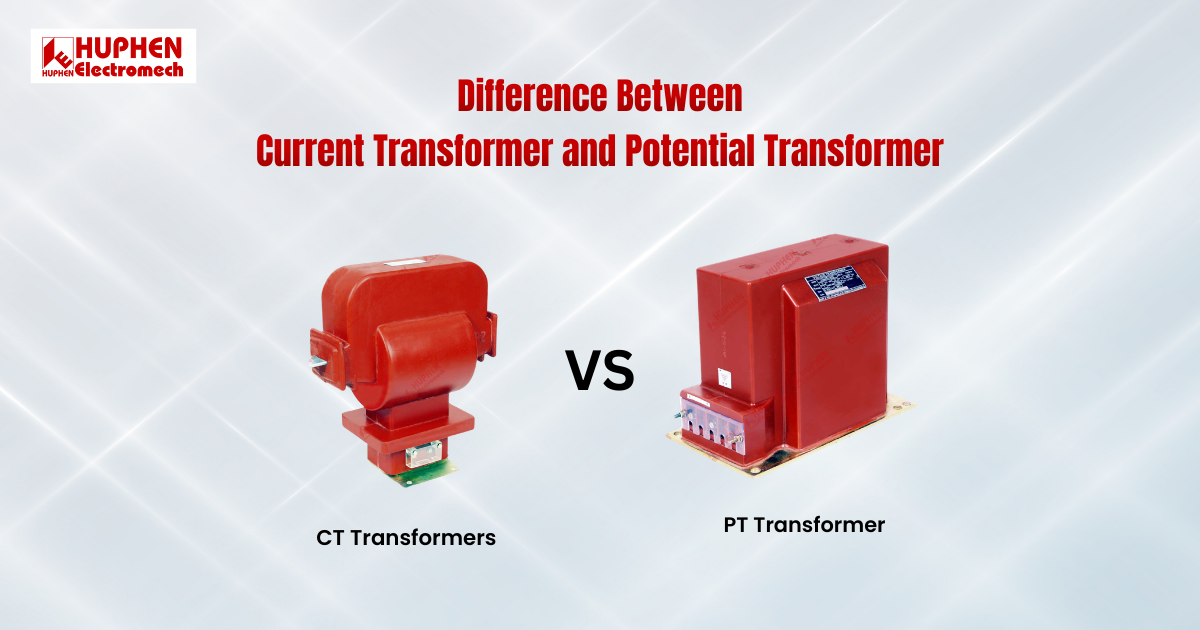
- Unlike Current Transformers (CTs), which are connected in series, PTs work in parallel.
Features of a Potential Transformer
- Windings are divided and insulated (often with oil or resin) to handle high voltage safely and avoid damage.
- PTs give very precise readings with minimal difference between input and output voltage.
- Built with a good-quality core and special winding design to reduce losses and improve efficiency.
- PT is connected in parallel with the circuit to measure voltage safely, like a voltmeter.
- More turns in the primary and fewer in the secondary help reduce high voltage to a safe level.
- PTs are available in wound type and capacitive type (CVT).
- Dry type PTs are durable, reliable, and need very little maintenance over time.
Advantages of Potential Transformers
- PTs safely separate high-voltage circuits from low-voltage devices like meters and relays, protecting people and equipment from dangerous voltage.
- They reduce very high voltage to a safe level so that normal instruments can measure it accurately.
- PTs send correct voltage signals to relays, helping detect faults quickly and protect the system from damage.
- They convert different high voltages into a common standard value, so the same measuring devices can be used everywhere.
- PTs help in tracking electricity usage and power quality, which is important for billing and system monitoring.
- Modern PTs are small in size, safe to use, and need very little maintenance.
- They are used in many places, like power plants, substations, and electrical systems, for monitoring and protection.
Common Uses of Potential Transformers
- Voltage Measurement & Monitoring: PTs help measure high voltage lines using normal low-voltage meters safely.
- Protective Relaying: They send correct voltage signals to relays to detect faults and switch off the system to prevent damage.
- Revenue Metering: PTs are used to measure voltage accurately for calculating electricity usage and billing.
- System Synchronization: They help match generator voltage with the grid for smooth and safe operation.
- Isolation: PTs keep high-voltage circuits separate, protecting people and instruments from electric shock.
- Control Systems: They provide voltage information to control systems like AVRs to maintain proper voltage levels.
Conclusion
In conclusion, what is a potential transformer? It is a key device that safely converts high voltage into a lower, usable level, making power systems more accurate, protected, and reliable, an essential part of every modern electrical network.
Beyond measurement, PTs play an important role in protection, monitoring, and efficient system operation, making them essential for industries, utilities, and engineers.
Looking for a reliable and high-performance Potential Transformer? HUPHEN Electromech offers advanced PTs suitable for 3.3KV to 33KV power systems, ensuring safe and accurate voltage measurement. Designed with high insulation strength (up to 36/70/170 kVp), they deliver superior safety and performance.
Built using durable epoxy resin, these potential transformers provide excellent strength and long life. Their compact and robust design makes them easy to install in HUPHEN metering cubicles, switchgear panels, and other electrical equipment.
Choose HUPHEN Electromech for trusted, efficient, and long-lasting power solutions. Contact Now: +91 9607381475 / +91 253 2381475 and Email: info@huphen.com
FAQs
1. What are the two types of potential transformers?
There are mainly three types of PTs: Wound (electromagnetic) , capacitive (CVT), and optical. The wound type is the most commonly used.
2. Is PT the same as CT?
No, PT and CT are different, CT measures current, while PT measures voltage in power systems.
3. Is PT connected in series or parallel?
PT is always connected in parallel with the line to measure voltage safely.
4. How are errors caused in potential transformers?
Errors happen due to resistance and reactance in windings and also because of phase difference, which affects accuracy.
Note: "This information is provided for informational purposes only. We are not responsible or liable for any issues arising from it."
Related Blogs